


If you’re dealing with tinnitus, you know how frustrating it can be. White noise and pink noise are two popular sound therapy options, but how do you choose? In short, it depends on your symptoms and personal comfort. This guide explains what each type of noise is, how they work, and why one might suit you better than the other.
Understanding White Noise and Pink Noise
White noise is a consistent sound that covers the full spectrum of human hearing (20 Hz to 20 kHz), with equal intensity across all frequencies. This creates a steady, unobtrusive background sound similar to a constant hiss or the static from an untuned radio. Its even distribution of sound frequencies makes it an effective masking tool, potentially drowning out the perceived noise of tinnitus.
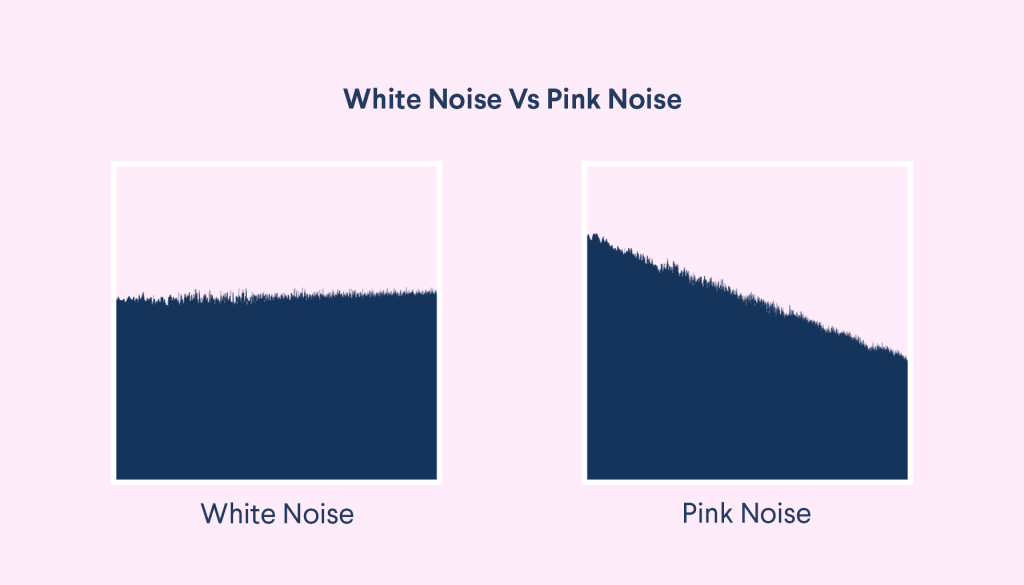
Pink noise, on the other hand, is characterized by a decrease in intensity at higher frequencies, giving more power to lower frequencies. This results in a deeper sound, often compared to the soothing, natural sounds of rain or a gentle waterfall. The distribution of sound in pink noise is more aligned with the way humans perceive sound, which can make it more pleasant and less harsh than white noise.
Effectiveness for Tinnitus Relief
The effectiveness of white noise and pink noise in providing tinnitus relief can vary from person to person, largely depending on individual preferences and the specific characteristics of their tinnitus.
White Noise for Tinnitus Relief
White noise is often effective because it provides a consistent auditory backdrop that can mask the high-pitched ringing typical of tinnitus. Many people find that the blanket coverage of sound frequencies helps to cover the tinnitus noise, making it less noticeable. This can be particularly beneficial in quiet environments or during sleep, where tinnitus tends to be more pronounced.
Pink Noise for Tinnitus Relief
Pink noise, with its emphasis on lower frequencies, offers a different kind of auditory masking. Some individuals find pink noise more soothing and less jarring than white noise, making it easier to listen to for extended periods. Its resemblance to natural sounds can also provide a calming effect, which might contribute to reduced stress and anxiety associated with tinnitus.
Choosing the Right Sound for You
When choosing between white noise and pink noise for tinnitus relief, personal preference plays a crucial role. Some may prefer the neutral, all-encompassing sound of white noise, while others might favor the more natural, gentle sound of pink noise. Experimenting with both types of noise can help determine which provides the most relief and comfort.
Additionally, the context in which the noise is used can influence its effectiveness. For instance, during work or concentration tasks, one might prefer the subtlety of pink noise, whereas at night, the comprehensive masking ability of white noise might be more beneficial for sleep.
Conclusion
Both white noise and pink noise offer potential benefits for tinnitus relief, but their effectiveness can vary based on individual preferences and the nature of one’s tinnitus. While white noise provides a broad-spectrum masking effect, pink noise offers a more natural and soothing sound. Ultimately, the choice between the two should be guided by personal comfort and the specific context in which they are used. By experimenting with both, individuals can find the most effective solution to manage their tinnitus symptoms and improve their quality of life.



Leave a comment