


Introduction
The International Classification of Diseases, 10th edition, or ICD-10 codes, are used by medical professionals worldwide to categorize and diagnose diseases, including tinnitus. Understanding these codes can help clarify the various conditions that are often associated with tinnitus.
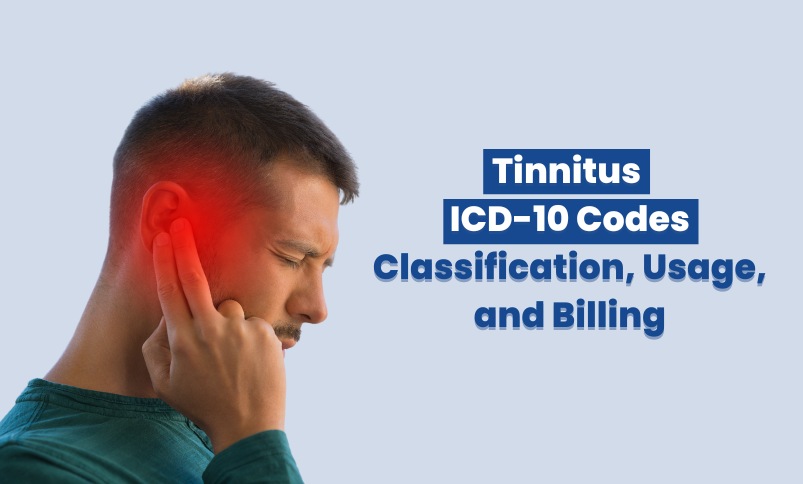
Understanding Tinnitus ICD-10 Codes
The ICD-10 code for tinnitus is H93.19. This code is commonly used in medical billing and documentation to denote cases of tinnitus. However, this code is broad and doesn’t specify the cause or the type of tinnitus. It only provides a general classification for this auditory condition.
Common Conditions Linked to Tinnitus
- Hearing Loss (H91): Hearing loss is the most common condition associated with tinnitus. The damage to the inner ear or auditory nerves often results in tinnitus. The ICD-10 codes for hearing loss range from H91.0 to H91.9, depending on the type and severity of the hearing loss.
- Meniere’s Disease (H81.0): Meniere’s disease is a disorder of the inner ear that causes severe dizziness (vertigo), tinnitus, hearing loss, and a feeling of fullness or congestion in the ear. The ICD-10 code for Meniere’s disease is H81.0.
- Acoustic Neuroma (D33.3): An acoustic neuroma is a benign tumor that develops on the nerve that connects the ear to the brain. The ICD-10 code for this condition is D33.3. Although the tumor is non-cancerous, it can cause tinnitus, along with balance problems and hearing loss.
- Otosclerosis (H80): Otosclerosis is a condition where an abnormal bone growth in the middle ear causes hearing loss. This can often be accompanied by tinnitus. The ICD-10 codes for otosclerosis range from H80.0 to H80.9.
- Ear Infections (H66): Ear infections, particularly those that affect the middle ear, can lead to temporary or permanent tinnitus. The ICD-10 codes for ear infections range from H66.0 to H66.9.
- Hypertension (I10): Hypertension, or high blood pressure, can exacerbate tinnitus. The ICD-10 code for essential (primary) hypertension is I10.
Conclusion
Tinnitus is a complex symptom linked to numerous conditions, many of which can be identified through ICD-10 codes. Understanding these codes can help medical professionals diagnose and treat the root cause of tinnitus more effectively. However, it’s important to note that these codes are merely a tool for classification and do not replace a comprehensive medical evaluation. If you are experiencing symptoms of tinnitus, it is important to consult a healthcare provider for a thorough examination and appropriate treatment.
Common Conditions Linked to Tinnitus ICD-10 Codes: Frequently Asked Questions
What is the ICD-10 code for tinnitus itself?
The ICD-10 code for tinnitus is H93.1. This code is specific to the symptom of ringing or buzzing in the ears, regardless of the underlying cause.
Can tinnitus be linked to hearing loss in ICD-10 coding?
Yes, tinnitus can often occur alongside hearing loss. For sensorineural hearing loss (the most common type), the ICD-10 codes range from H90.3 to H90.5 depending on laterality (whether it’s one ear or both). If both conditions are present, you’d typically code for each condition separately.
Is tinnitus associated with Meniere’s disease in ICD-10 coding?
Yes, tinnitus can be a symptom of Meniere’s disease, which has its own ICD-10 code: H81.0. This condition usually involves tinnitus, vertigo, and hearing loss, so related symptoms may also need to be coded.
What ICD-10 code should be used for tinnitus caused by noise exposure?
If tinnitus is linked to noise-induced hearing loss, use H83.3 for noise effects on the inner ear. This may also involve a separate code for the related hearing loss or other symptoms based on the actual diagnosis.
How do you code tinnitus associated with head trauma?
For tinnitus caused by head or neck injuries, you’ll first identify the trauma or injury code from the chapter on injury (S00-T88) based on the specific diagnosis. Then, use H93.1 to denote the tinnitus. It’s okay to code for both as they provide a comprehensive clinical picture.
Are there codes for psychological conditions linked to tinnitus?
Yes, tinnitus can take a toll on mental health. For anxiety or depression caused by or exacerbated by tinnitus, use codes like F41.1 (generalized anxiety) or F33.2 (major depressive disorder, recurrent, moderate). You’ll also still include the tinnitus code H93.1 to reflect its presence.
Can tinnitus be tied to otitis media in coding?
Yes, chronic ear infections like otitis media can lead to tinnitus. For otitis media, codes range from H65 (non-suppurative otitis media) to H66 (suppurative and unspecified otitis media). Combine this with H93.1 to capture both aspects of the condition.
What code applies if tinnitus is due to medication side effects?
If tinnitus occurs as a side effect of medication, use T36-T50 codes to describe the adverse effect, followed by H93.1 for tinnitus. Be sure to also identify the specific medication causing the issue.
Understanding the connection between tinnitus and its ICD-10 codes is a valuable step in managing this condition. By learning about the possible underlying causes, you’re empowering yourself with knowledge to seek better care. If you’re dealing with tinnitus or curious about its related medical classifications, consider discussing these codes with a healthcare provider to explore tailored treatment options.


Leave a comment